


Published November 16, 2026
TL;DR
If you regularly take your 4Runner onto rocky trails, I'd recommend a complete skid plate package. If you're building your truck gradually, starting with the engine skid and adding transmission and transfer case protection later is perfectly reasonable. Victory 4x4 offers both approaches in steel or aluminum, and the aluminum package weighs 59 pounds less than steel.
One of the things I've always appreciated about the 5th Gen Toyota 4Runner is how capable it is right out of the box. You don't need to replace every factory component before heading out on an adventure.
But there's a difference between having enough ground clearance to drive over an obstacle and having enough protection when you don't quite clear it.
I've been off-roading for more than 25 years, and I've put plenty of vehicles in situations where something underneath makes contact with a rock. Sometimes it's a harmless scrape. Other times, a poorly placed impact can damage something that leaves you stranded.
That's why I consider skid plates an important upgrade for anyone regularly exploring rocky trails. They protect expensive components that aren't particularly forgiving when they meet a rock.
The question isn't necessarily whether you should buy skid plates. It's how much protection you need, whether you should purchase everything at once, and which material makes sense for your 4Runner.
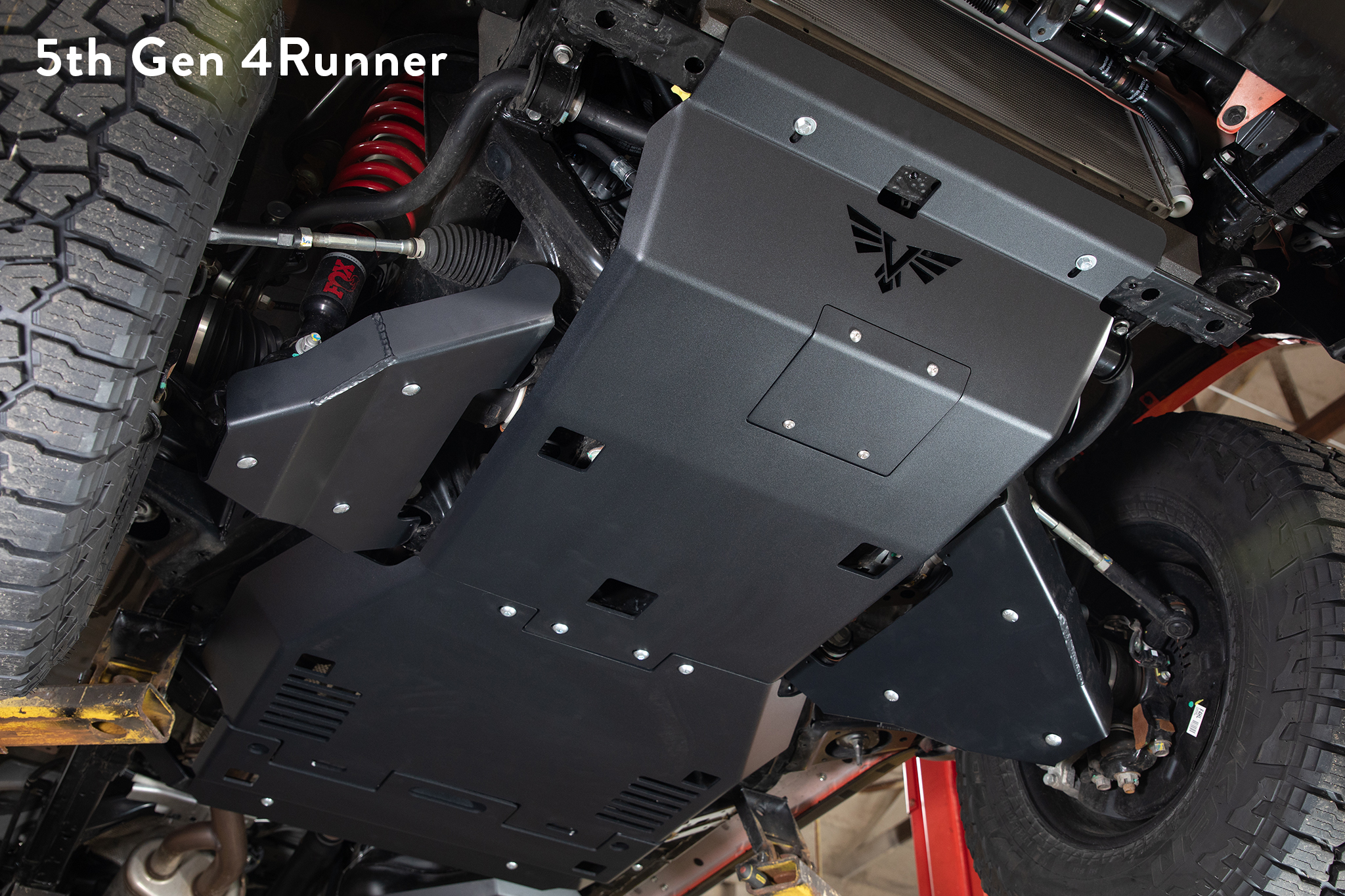
Our 5th Gen 4Runner Skid Plate Package includes three pieces designed to work together:
✓ Engine skid: Protects the engine and oil pan.
✓ Transmission skid: Protects the transmission and provides coverage around the catalytic converters.
✓ Transfer case skid: Protects the transfer case farther back underneath the vehicle.
Together, these create a continuous layer of protection across some of the most vulnerable components beneath your 4Runner.
We manufacture them in Kalamazoo, Michigan, using either 3/16" steel or 1/4" aluminum. Both versions are frame mounted and designed for bolt-on installation, and they're finished in satin textured black powder coat over zinc primer.
The package is available for 2010-2024 four-wheel-drive 4Runners.
One important detail: The fuel tank skid is sold separately. The three-piece package protects the engine, transmission, and transfer case, but it isn't complete coverage for every component underneath your vehicle.
There's nothing wrong with building your 4Runner gradually. In fact, I'd rather see someone purchase the protection they need today than wait until they can afford every upgrade at once.
If I were starting with one skid plate, I'd begin with the engine skid. It's at the front of the vehicle, where obstacles can contact the underside as you approach or cross them.
The Victory Engine Skid Plate also includes a removable oil filter access panel and an oil drain hole, so routine maintenance doesn't require removing the entire skid.
Next, I'd add the Transmission and Catalytic Converter Skid Plate. It protects an area that can be vulnerable when crossing ledges or driving over uneven terrain.
Finally, I'd add the Transfer Case Skid Plate, particularly if I were regularly driving trails where the underside of the vehicle contacts obstacles.
Buying the complete package costs less than purchasing those three pieces individually at regular prices, and you get protection across the entire drivetrain from the beginning:
✓ Steel: $1,044.99 for the package vs. $1,164.97 bought separately, a savings of $119.98
✓ Aluminum: $1,284.99 for the package vs. $1,431.97 bought separately, a savings of $146.98
My take: If you know you're going to buy all three, purchase the package. If you're working within a budget or only occasionally encounter rocks, start with the engine skid and build from there.
This is one area where I'd encourage buyers to look at actual numbers.
It's easy to say aluminum is lighter than steel, but how much difference does that really make on a 4Runner? Here's what each of our skid plates weighs:
✓ Engine skid: 48 lb steel, 27 lb aluminum
✓ Transmission skid: 54 lb steel, 27 lb aluminum
✓ Transfer case skid: 49 lb steel, 38 lb aluminum
✓ Complete three-piece package: 151 lb steel, 92 lb aluminum
Aluminum saves 59 pounds, about 39% of the steel package's weight. The aluminum transfer case skid keeps steel mounting brackets, which is why it saves less weight than the other two pieces.
That's a meaningful difference, especially when you're also adding bumpers, a roof rack, recovery equipment, and camping gear.
Steel is my preference for someone who expects frequent hard contact with rocks. It's durable, and it can deform under an impact without necessarily cracking.
Aluminum is an excellent choice for someone who wants substantial protection without carrying as much additional weight. It's especially appealing for overland travel, where the vehicle may already be loaded with equipment.
Neither material is automatically right for everyone.
My take: For regular overlanding and moderate rocky trails, I'd lean toward aluminum. For a 4Runner that spends a lot of time dragging across rocks, I'd choose steel.
KDSS is one of the most common concerns we hear from 4Runner owners shopping for skid plates.
Toyota's Kinetic Dynamic Suspension System uses hydraulic components to help manage the sway bars. That creates some packaging differences underneath the vehicle compared with a non-KDSS 4Runner.
Our Victory engine skid is compatible with KDSS, and it doesn't require KDSS-specific spacers. Spacers are only needed when the vehicle has a front differential drop.
That's an important distinction because KDSS and a differential drop are two separate things.
If you're purchasing multiple skid plates, pay attention to the year selections and installation instructions for each piece. The engine skid's KDSS compatibility shouldn't be taken as a blanket statement about every aftermarket component you might have installed underneath the truck.
The fuel tank is another area worth protecting, particularly if you're regularly driving trails with large rocks or deep ruts.
Our Victory 4x4 Fuel Tank Skid Plate is available separately from the three-piece drivetrain package, starting at $429 in steel or $509 in aluminum.
Why separate it? Not every customer needs the same level of protection. Some owners want to protect the engine, transmission, and transfer case first, while others regularly drive terrain where the fuel tank is exposed to impacts.
If you're building a 4Runner for difficult trails, I'd consider adding fuel tank protection as part of the overall plan.
For moderate overlanding, I'd start with the drivetrain and evaluate the fuel tank based on the terrain you actually encounter.
They can, depending on the design.
One of the things we considered when developing our engine skid was how owners would perform routine oil changes. That's why it includes a removable oil filter access panel and an oil drain hole.
The goal is to provide protection without creating unnecessary work every time the vehicle needs service.
It's also worth remembering that skid plates are intended to take impacts. Scratches, gouges, and worn finishes are normal when you're using them on rocky trails.
I'd much rather see damage on a replaceable skid plate than on an oil pan, transmission, or transfer case.
Do I need a full skid plate package for my 5th Gen 4Runner?
Not necessarily. If you mostly drive maintained roads and occasional mild trails, you may not need all three pieces. For regular rocky trails, I'd recommend the complete package because it protects the engine, transmission, and transfer case as one system.
Can I buy Victory 4x4 skid plates one at a time?
Yes. The engine, transmission, and transfer case skid plates are available individually. I'd start with the engine skid if you're building gradually, then add the remaining pieces as your trail use and budget allow.
How much does the Victory 4Runner skid plate package weigh?
The three-piece steel package weighs 151 pounds and the aluminum package weighs 92 pounds, so aluminum is 59 pounds lighter. These are the skid plate weights, not the net increase over the factory protection you remove.
Will the Victory engine skid work with KDSS?
Yes. The 5th Gen 4Runner engine skid is KDSS-compatible, and KDSS alone doesn't require spacers for that skid. A front differential drop is a separate modification that does require additional hardware.
Is aluminum strong enough for 4Runner skid plates?
Yes, properly designed aluminum skid plates can provide substantial protection for overlanding and trail driving. We use 1/4" aluminum rather than the 3/16" steel used in our steel version. I'd choose based on the severity of the terrain and how much additional weight you want to carry.
Does the full skid plate package include the fuel tank skid?
No. The Victory package includes the engine, transmission, and transfer case skid plates. Fuel tank protection is available separately, so you can add it when your trail use calls for it.
For a 5th Gen 4Runner used primarily for overlanding, camping, and exploring rocky trails, I'd choose the complete aluminum package. It provides protection across the drivetrain while saving 59 pounds compared with steel.
If I were building a truck for more aggressive rock crawling, I'd choose the steel package. The additional weight would be a reasonable compromise for the type of contact I'd expect.
And if I were just starting to build my 4Runner, I'd have no problem buying the engine skid first and adding the others later.
I've always believed upgrades should solve problems, not just add equipment to a vehicle. Your 4Runner doesn't need every accessory available, but protecting expensive drivetrain components is money well spent when you're regularly driving rocky trails.
The right choice is the one that lets you enjoy the trip without constantly worrying about what's underneath your truck.
Explore the Victory 4x4 5th Gen 4Runner Skid Plate Package, or start with the individual skid that makes the most sense for your next adventure.
Brian Meyers
Founder, Victory 4x4