


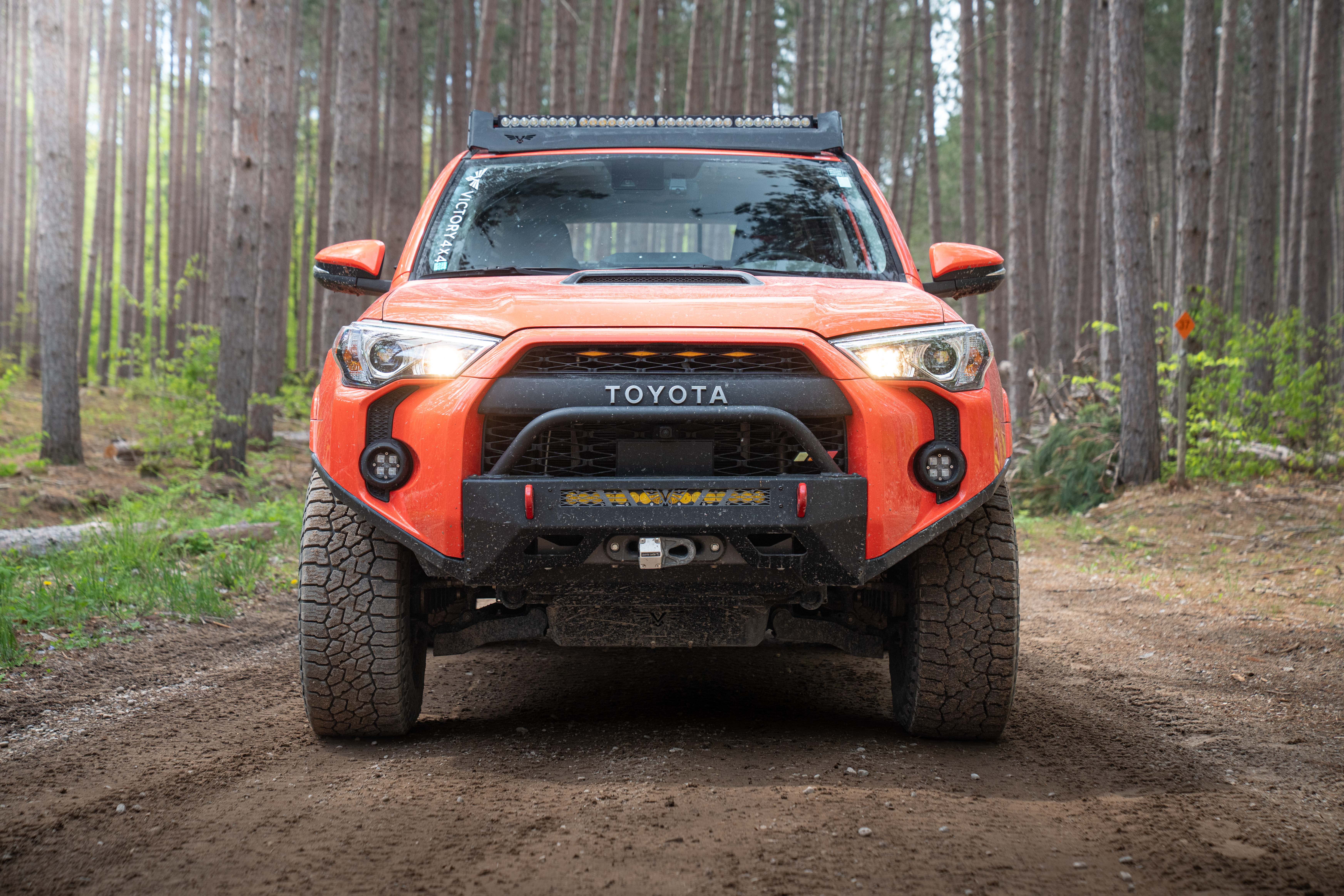
Published November 16, 2026
Whether you just bought a Toyota 4Runner, Tacoma, Land Cruiser, Lexus GX460, GX470, Jeep Wrangler, Ford Bronco, or another capable 4x4, congratulations.
Now comes the fun part.
One of the first questions almost every new owner asks is, "What's the first modification I should make?"
You can spend hours on YouTube and social media watching fully built rigs tackle incredible trails. Before long, you've got a shopping cart full of bumpers, lights, roof racks, tires, suspension, and recovery gear.
Slow down. You don't need to buy everything at once.
In fact, I think you'll build a better vehicle if you let your adventures guide your decisions. Here's the path I'd recommend.
TL;DR
✓ Stage 1, protect your investment: skid plates and rock sliders
✓ Stage 2, organize your gear: roof rack, MOLLE panels, drawer system, cargo storage
✓ Stage 3, increase capability: lift kit, larger tires, upgraded wheels
✓ Stage 4, prepare for bigger adventures: front bumper, winch, rear bumper, tire carrier, full-size spare, recovery gear
My advice: Protect it first. Use it often. Let your adventures determine what comes next.
If you're planning to hit trails or even simple forest roads and two-tracks right away, this is where I'd spend my money first.
The truth is, most of us are still learning when we buy our first off-road vehicle. You're figuring out where your tires are, learning how the vehicle reacts to obstacles, and discovering what it can do.
You're probably going to scrape something. That's okay. We've all been there.
In our article comparing steel and aluminum skid plates, I share the story of a friend who learned this lesson the hard way after damaging the underside of his vehicle on what should have been a fairly easy trail. That one mistake turned into a very expensive repair, and it reinforced why I always recommend protecting your vehicle before adding accessories.
That's why I almost always recommend:
Think of them as cheap insurance. They protect some of the most expensive parts of your vehicle while giving you the confidence to learn. If you drive a 5th Gen 4Runner, our skid plate guide walks through the full package, steel vs. aluminum weights, and KDSS fitment.
Once your vehicle is protected, the next challenge usually isn't capability. It's organization.
Recovery gear, camping equipment, tools, coolers, dog supplies... it doesn't take long before the back of your vehicle becomes a pile of gear.
The good news is there are so many great organization products on the market today that there's really no reason to be sloppy.
Your gear is expensive. You don't want your recovery strap tangled around your tree saver, your flashlight buried under two storage totes, or your air compressor packed somewhere you can't reach when you need it.
One of my favorite examples came from a customer we featured in our MOLLE panel article. Instead of buying a rear window MOLLE panel, he installed wire shelving from the local hardware store. It actually worked, but it wasn't exactly designed for the job.
It was creative, but it also reminded me why purpose-built organization products exist.
This is when I start looking at upgrades like:
✓ Roof racks
✓ Interior MOLLE panels
✓ Bed racks (Tacoma owners)
✓ Drawer systems
✓ Cargo storage solutions
These upgrades won't make your vehicle more capable, but they'll make every trip more enjoyable because everything has a place.
I can almost picture what's happening next.
There's a FunTreks guidebook sitting on your desk. You've been flipping through it every night, circling trails in Colorado and imagining the trip: Imogene Pass, Engineer Pass, the Alpine Loop. Some of the most beautiful trails anywhere in the United States.
Now you're starting to wonder if your vehicle is ready.
This is usually when suspension, tires, and wheels become worthwhile upgrades:
✓ Lift kit
✓ Larger all-terrain or mud-terrain tires
✓ Upgraded wheels
These modifications improve ground clearance, traction, and approach angles, allowing you to explore trails that might have made you nervous before.
The important part is that you're upgrading because your adventures demand it, not because the internet told you to.
You hit a few local trails. Now you're hooked.
That FunTreks guidebook is cracked open again, except this time you're planning bigger adventures: Black Bear Pass, remote trails in Arizona, the Rubicon. The trails you've been dreaming about are starting to become reality.
As your vehicle becomes more capable, recovery equipment becomes just as important. This is when many owners begin adding:
✓ Front bumper
✓ Winch
✓ Rear bumper
✓ Swing-out tire carrier
✓ Full-size spare tire
✓ Recovery gear
These upgrades aren't about making your vehicle look tougher. They're about giving you the confidence to explore farther from pavement, knowing you're better prepared if things don't go exactly as planned.
One thing worth knowing before you add a steel bumper and winch: that weight sits over your front suspension, which is why we wrote Suspension Upgrade After a Bumper and Winch? Read This.
I've been doing this for a long time, and I still haven't "finished" building an off-road vehicle. That's part of the fun.
Every trip teaches you something. Maybe you realize your recovery gear needs a better place to live. Maybe you decide you need better gearing for those bigger tires. Or maybe you get home and immediately start looking for the next trail.
Don't feel like you have to build the ultimate rig before you start exploring. Get out there. Use your vehicle. Figure out what you like, what you don't, and what would make the next trip even better.
Then make your next upgrade.
That's how most great builds happen. Not all at once, but one adventure at a time.
What should I modify first on a new 4Runner?
If you're going to drive trails, forest roads, or two-tracks, start with protection: skid plates and rock sliders. They guard the oil pan, transmission, transfer case, and rocker panels while you're still learning how your vehicle handles obstacles.
Should I buy a lift kit before skid plates?
I wouldn't. A lift and bigger tires help you reach harder trails, but they don't protect anything. Protecting the vehicle first means a scrape on an easy trail stays a scrape instead of an expensive repair.
Do I need a winch for my first trail trip?
Not usually for mild, popular trails, especially if you travel with another vehicle. Once you start planning remote trips or more difficult trails, a front bumper, winch, and recovery gear become much more important.
When does a roof rack make sense?
When your gear starts outgrowing the cargo area. A roof rack, interior MOLLE panels, or a drawer system gives everything a place, so you can reach your recovery gear and tools when you need them.
Should my armor be steel or aluminum?
It depends on how hard you use your vehicle and how much weight you want to add. Steel suits frequent hard contact with rocks, while aluminum saves weight for overlanding. Our guides on steel vs. aluminum skid plates and steel vs. aluminum vs. EVO bumpers go into the details.
Does this order apply to a Tacoma, Lexus GX, Land Cruiser, Wrangler, or Bronco?
Yes. The same four stages work for almost any capable 4x4: protect it, organize your gear, add capability, then prepare for bigger adventures. Tacoma owners may add a bed rack in stage two.
Along the way, we've written guides to help answer many of the questions you'll run into, including:
✓ Steel vs. Aluminum Skid Plates
✓ Steel vs. Aluminum vs. EVO Bumpers
✓ How to Choose a Roof Rack
✓ Are MOLLE Panels Worth It?
✓ How to Safely Carry Extra Fuel Off-Road
✓ Off-Roading With Your Dog: Safety Tips and Gear We Bring
Hopefully they'll save you a few mistakes, a little money, and help you build a vehicle that's ready for wherever the trail takes you.
And with any luck, we'll cross paths on the trail.
Brian Meyers
President and CEO, Victory 4x4